
Elihu's Attempt to Explain
Book of JobThis thread follows Elihu's entrance as a younger disputant and his effort to recast suffering as instruction before God's larger answer supersedes human certainty.
increasing Bearing strength in each event
 decreasing
Bearing strength in each eventdecreasingThe Elders Fall Silent
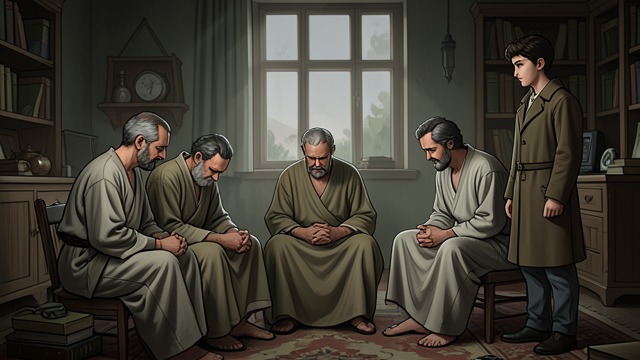
The Elders Fall Silent
Deadlock
The three friends stop answering Job, having failed to persuade him while still judging him.
Opening for Elihu
Elihu has waited because he is younger. Their impasse gives him a reason to claim the floor and offer another account.
Anger at Both Sides

Anger at Both Sides
Double Rebuke
Elihu is angry with Job for self-justification and with the friends for condemning Job without a convincing answer.
New Position
He presents himself as a mediator, but his confidence foreshadows another effort to speak on God's behalf.
Suffering as Instruction

Suffering as Instruction
Interpretation
Elihu argues that God may use dreams, illness, and pain to warn a person and turn him away from destruction.
Limitation
The explanation offers suffering a possible purpose but cannot establish that this is Job's particular case. It remains a human interpretation.
The Weather Builds
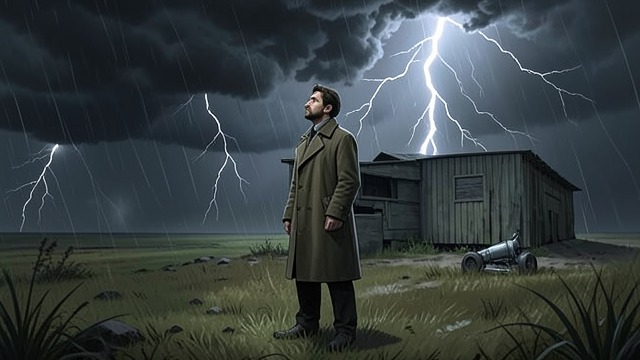
The Weather Builds
Natural Signs
Elihu describes thunder, clouds, rain, frost, and the power that exceeds human understanding.
Transition
His attention to the weather prepares for the whirlwind, while his speech also underlines how little people can claim to know about divine action.
God Takes the Floor

God Takes the Floor
Arrival
God answers Job from the whirlwind, moving the discussion beyond Elihu's lesson about correction.
Displacement
The divine speeches do not ratify Elihu's full explanation. Their questions widen the frame from a single person's pain to creation's unexplained scale.
After the final debate between Job and his friends
At Elihu's first intervention
During Elihu's explanation of pain
At the end of Elihu's speeches
Immediately after Elihu's final words
